The 5 D’s of Perimeter Security for Construction Sites and Businesses in Birmingham
8 months ago - 3 min read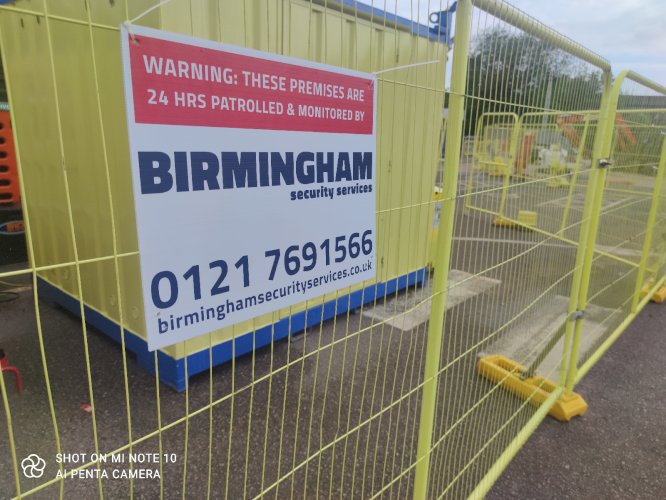
Whether you are protecting a manned construction site or an unmanned remote location, perimeter security plays a critical role in safeguarding people, property, and assets. Effective perimeter protection is designed to create a physical and psychological barrier that can deter, detect, deny, delay, and defend against unauthorised access.
For many businesses, especially those managing construction site security in Birmingham, outdoor perimeter security is often overlooked. Instead, budgets are heavily weighted towards interior security measures, which are usually more expensive and reactive.
This raises an important question. Why invest most of your security budget inside the building when early prevention can stop intruders long before they reach your assets?
A relatively small investment in outdoor security measures such as fencing, lighting, and static manned guarding can significantly strengthen your site security in Birmingham by adding distance, time, and complexity to any attempted breach.
Why perimeter security should come first
A strong security strategy is built in layers. This approach is often compared to an onion, with multiple protective layers working from the outside in. Each layer creates an additional obstacle for a potential intruder, with security measures becoming stronger and more controlled as access moves closer to your most valuable assets.
Outdoor perimeter security forms the first and most important layer of defence. When designed correctly, it not only improves overall protection but can also reduce long-term security costs by preventing incidents before they escalate.
To achieve a robust and effective security plan, businesses should design their perimeter protection around the 5 D’s of perimeter security.
1. Deter
The outermost layer of your perimeter is designed to discourage criminal activity before it begins. At this stage, the goal is not physical confrontation but psychological prevention.
Common deterrent measures include perimeter fencing, clear signage, security lighting, and visible CCTV cameras. These elements signal that the site is protected and monitored, often causing opportunistic criminals to move on to easier targets.
For construction site security in Birmingham, visible deterrents are particularly effective in reducing theft, vandalism, and unauthorised access outside working hours.
2. Detect
If deterrence fails, the next layer focuses on early detection. Detection measures alert you to potential breaches as soon as they occur, allowing for a rapid and controlled response.
Effective detection tools include motion sensors, alarms, and high-resolution surveillance cameras. Modern megapixel cameras are especially valuable, providing accurate monitoring across large outdoor areas and poor lighting conditions.
Early detection is essential for site security in Birmingham, where fast response times can prevent minor incidents from becoming serious losses.
3. Deny
Once a breach attempt is detected, the next objective is to deny access. This layer is designed to prevent unauthorised individuals from entering the site while still allowing safe and efficient access for authorised personnel.
Deny measures may include controlled entry points, access control systems, security gates, and manned guard stations. These controls ensure that even if someone reaches your perimeter, they cannot easily progress further.
This stage is particularly important on construction sites where unauthorised access can pose serious safety risks.
4. Delay
At this point, authorities or security teams may already be responding. The purpose of the delay layer is to slow the intruder down long enough for help to arrive or for the individual to abandon their attempt.
Delay measures can include additional fencing, locked doors and windows, reinforced gates, and internal barriers. Surveillance cameras continue to play a role here by providing situational awareness and allowing security teams to assess the effectiveness of each barrier.
Delaying access is a key component of effective construction site security in Birmingham, especially on large or high-value developments.
5. Defend
If an intruder persists and reaches the final layer, the focus shifts to defence. This stage involves direct intervention, typically by trained security personnel, to stop the intrusion and escort the individual off the premises.
Defensive measures often involve manned guarding supported by real-time surveillance and, where necessary, coordination with law enforcement. This layer overlaps with others depending on the site layout and risk level, but it represents the final safeguard protecting your assets.
Strengthen your site security with a layered approach
Outdoor perimeter security is essential to building a strong, cost-effective, and proactive security strategy. By applying the 5 D’s of perimeter security, businesses can significantly reduce risk, improve response times, and protect valuable assets more efficiently.
For businesses requiring reliable site security in Birmingham, investing in perimeter protection is not just smart, it is essential.
How CSS Security can help
CSS Security provides professional construction site security in Birmingham, offering tailored perimeter protection, manned guarding, penetration testing, and threat awareness training. We help businesses identify vulnerabilities and strengthen every layer of their security strategy.
If you need expert advice or practical security solutions, contact CSS Security today to protect your site with confidence.